Buzz has no connector catalog. Integration happens at the agent layer through MCP servers that each person configures on their own machine, capped at 16 per session, and a workflow's only outbound action to the wider world is a generic webhook call. Nobody can see the full picture of what is connected, and nobody can change it centrally. If someone leaves, the tools they wired up leave with their laptop.
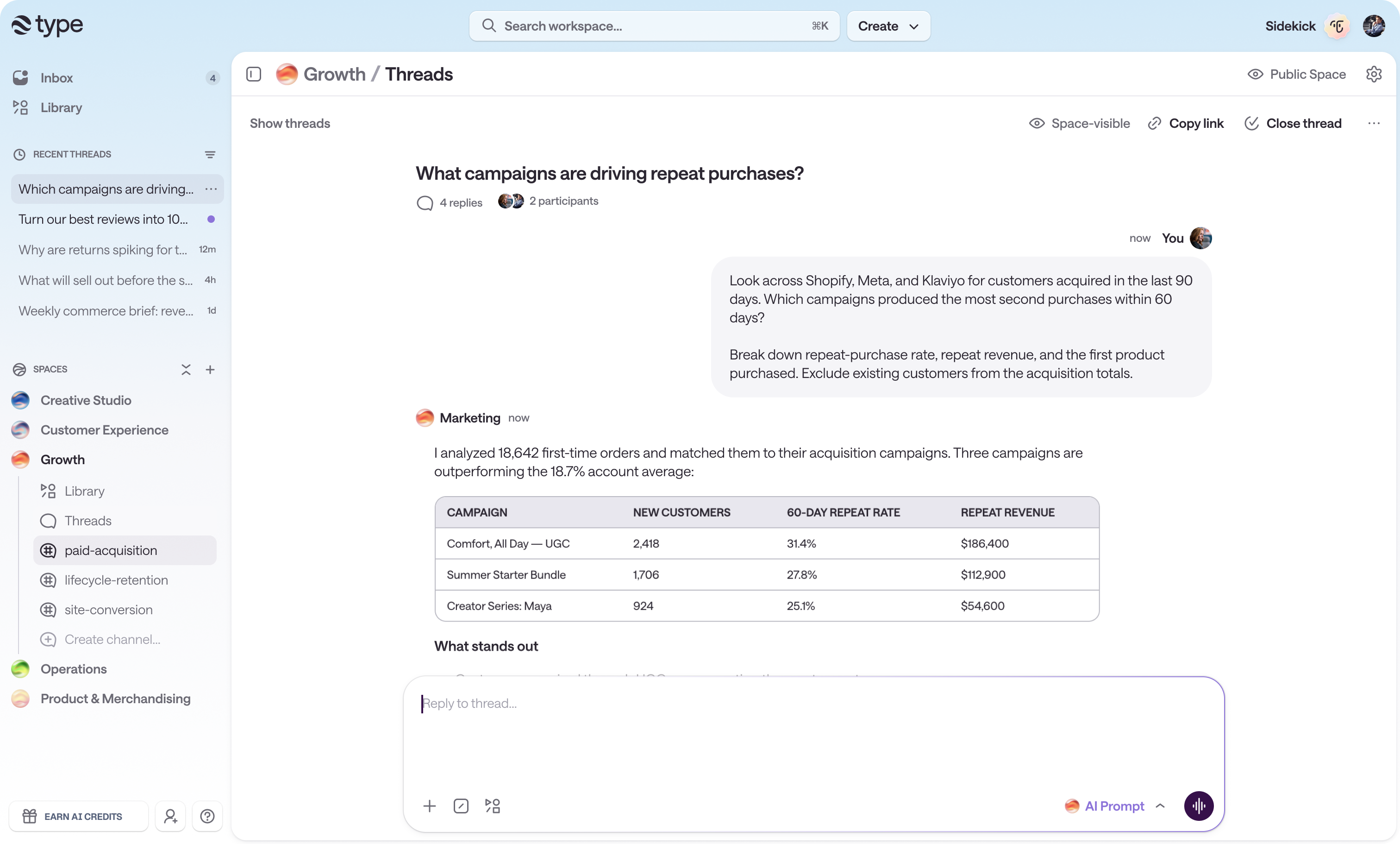
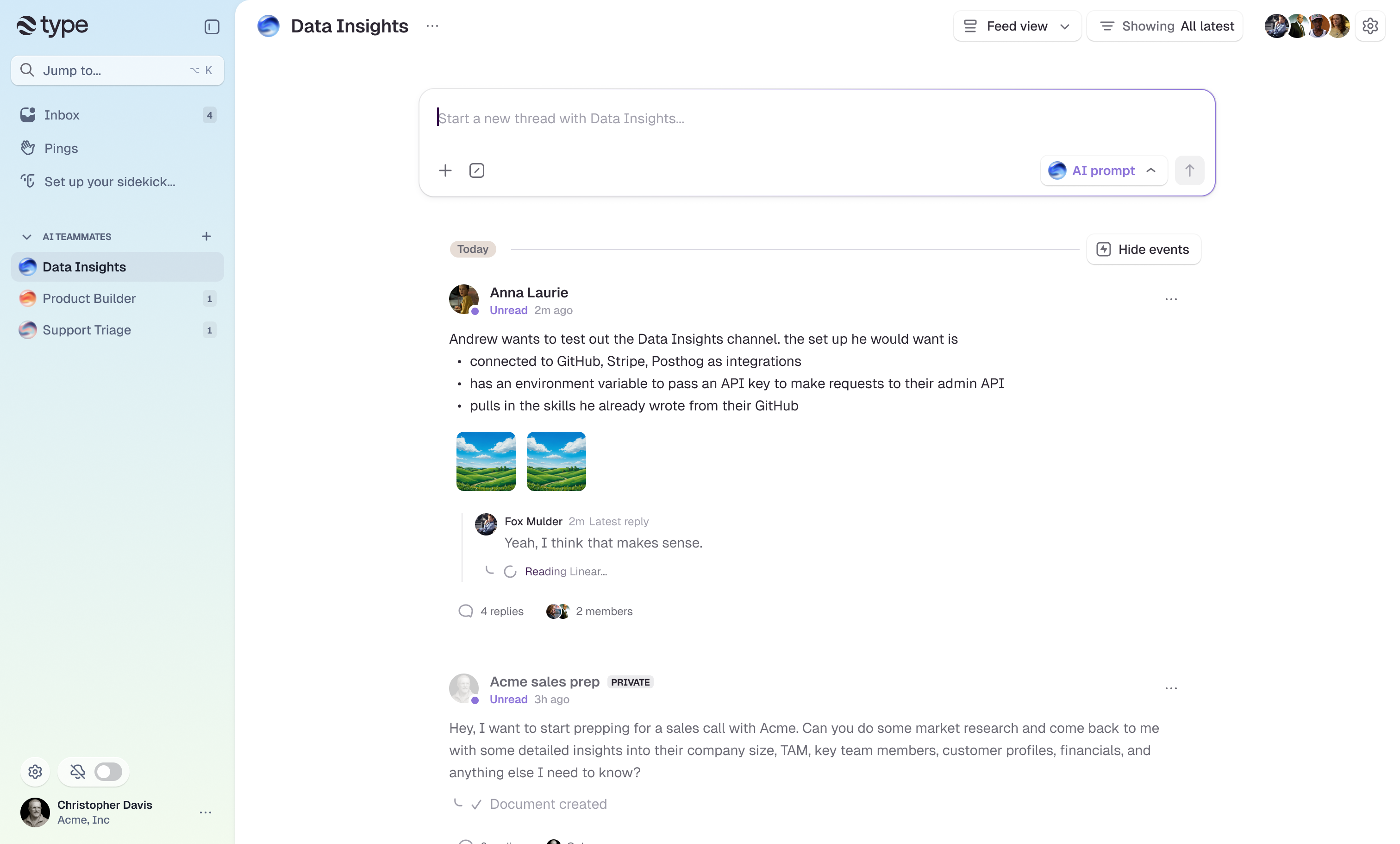
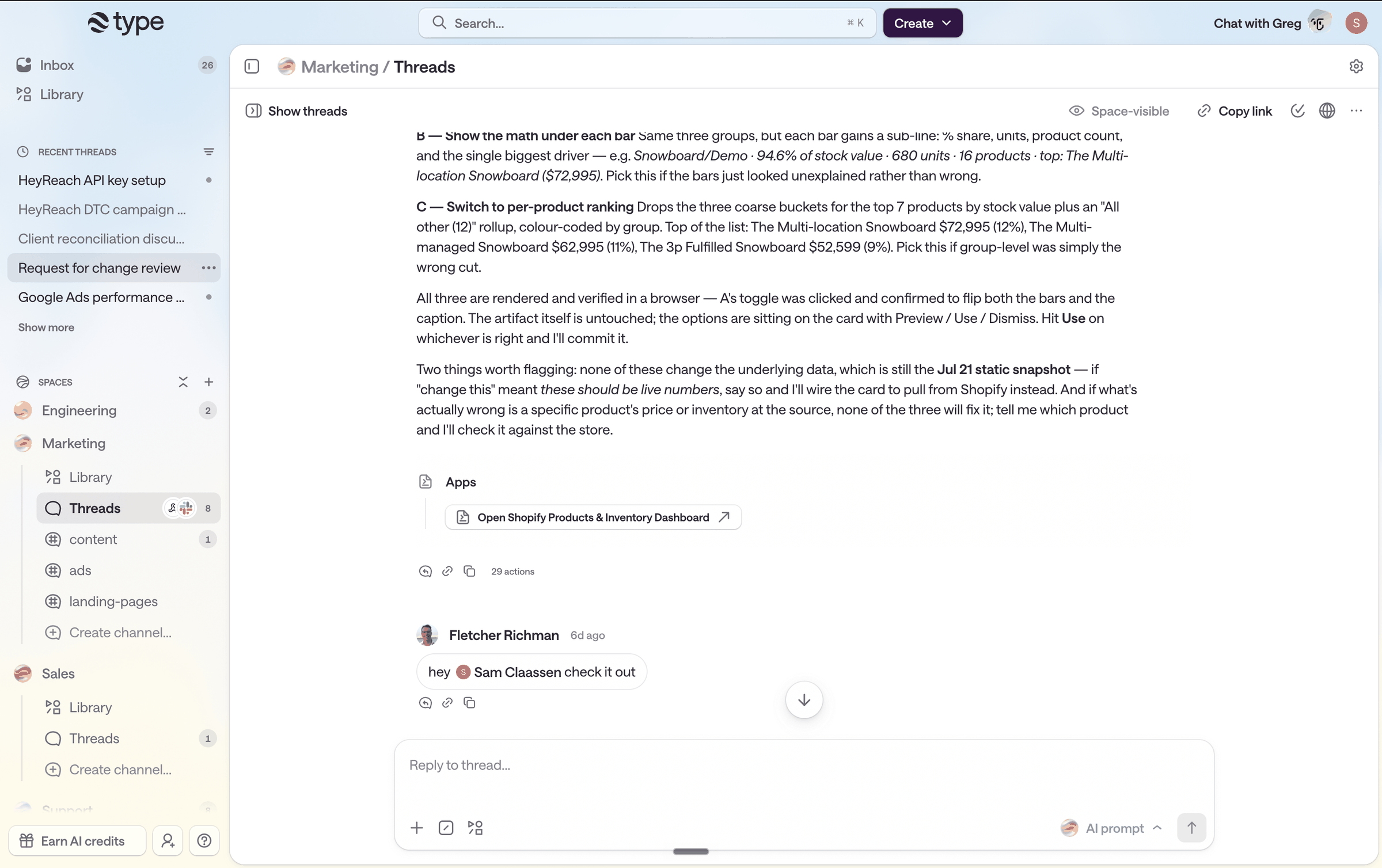
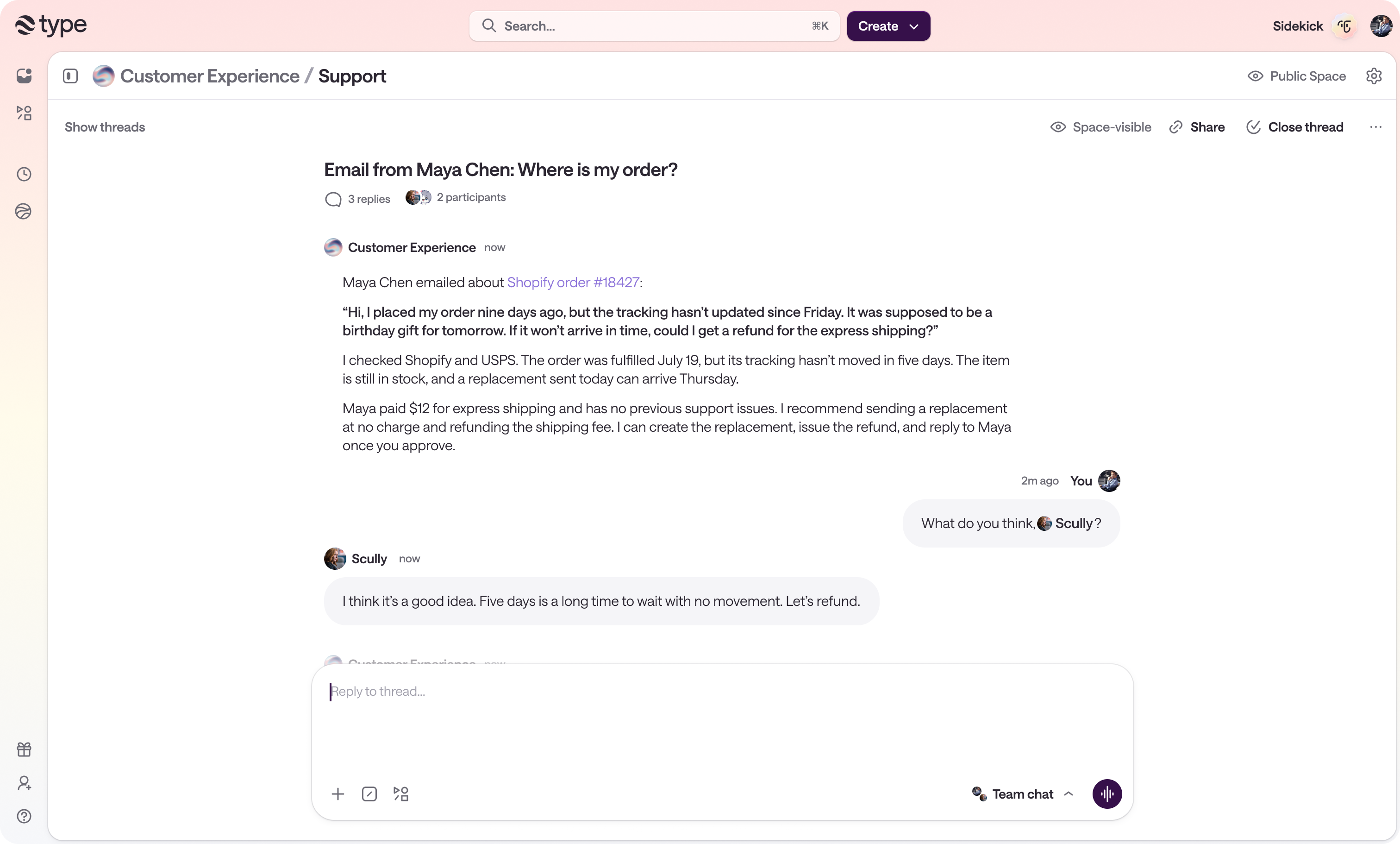
type.com ships nearly 1,000 native integrations across 16 categories, managed org-wide rather than per machine. An admin connects a tool once and assigns it to the Spaces that should have it, with OAuth or an encrypted API key, revocable whenever. Personal and organization connections stay separate, so an agent acts with the access of the person and conversation that started the work rather than everything connected in the workspace. Anything not in the catalog connects through a custom API connector with no middleware to write. Google Drive scopes down to specific files and folders, and a broken connection reconnects in place.
Automation has the same spread. type.com triggers on a schedule, a webhook, an app event, an RSS feed, a Slack message, or an email sent to the Space's own inbound address. Buzz's cron scheduler works, and its approval gates do not: the engine logs that approval gates are not yet implemented and marks the run Failed, and two more workflow actions, send_dm and set_channel_topic, return NotImplemented.
The part of type.com that gets the least attention and pays off the most is skills: reusable procedures your team keeps improving. Each has an owner and version history, a coworker's edit arrives as a change request the owner approves, and each reports 30-day usage, top users, and run history. Teams wanting engineering rigor can keep a GitHub registry as the source of truth. You can also push a live Claude Code or Codex session into a Space from the CLI and continue it together, or upload .skill files in the format Claude Code and Claude Desktop use.